
Company Registration in Nepal (2026): CAMIS Process, Fees & Capital
A 2026 practitioner's guide to company registration in Nepal — Companies Act 2063, OCR's CAMIS digital portal,...
Read more →
Alpine Law Associates is the leading full-service law firm encompassing a wide range of legal practices located in Kathmandu, Nepal. It consists of a team of the country's best lawyers, each with expertise in their respective fields, tailored to meet clients' specific needs.
Anamnagar-29, Kathmandu


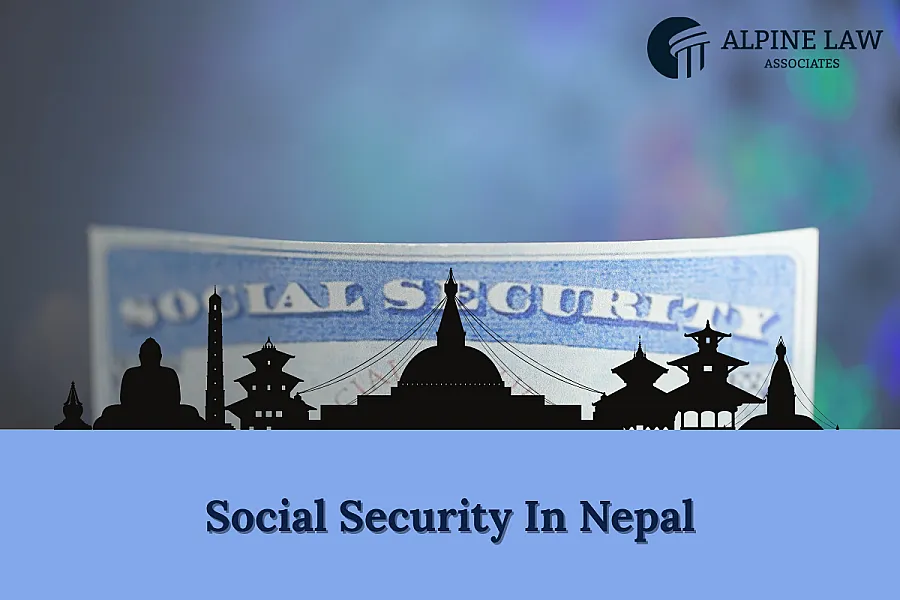
The Social Security Fund (SSF) — samajik suraksha kosh — is the institution that runs Nepal's formal-sector social insurance under the Contribution-Based Social Security Act 2074. Every formal-sector employer enrols, every employee is registered, and every month 31% of basic salary goes into the Fund — 11% from the employee and 20% from the employer — funding four protection schemes from medical to old-age pension. SSF replaces standalone provident-fund and gratuity arrangements for enrolled employers.
This is the 2026 (2082/83 BS) guide to SSF in Nepal — the legal framework, contribution structure, the four schemes, enrolment via the SSF portal, and how it sits alongside older PF/gratuity. For related topics see our labour law in Nepal, salary law and retirement & pension guides.
Quick answer — SSF in Nepal (2026):
Alpine Law Associates — trusted by 1,000+ clients across family, corporate, civil, and criminal cases in Nepal.
Speak with our lawyers today →
Our corporate team sees most SSF problems at one of two points — registration set-up (employer not enrolled, employees missing) and contribution gaps that surface at the annual labour audit. The fix in both cases is procedural: enrol once on sosys.ssf.gov.np, run the monthly deposit on the 15th alongside payroll, and reconcile contributions at the audit. SSF is one of the cleanest compliance regimes when it is set up properly from day one.
The Social Security Fund — samajik suraksha kosh — is the autonomous institution under the Ministry of Labour, Employment & Social Security that administers Nepal's contribution-based social insurance under the Contribution-Based Social Security Act 2074 (2017) and its Regulations 2075. Employers and employees in the formal sector enrol with SSF, contribute monthly, and members receive benefits from four protection schemes. The SSF launched operations in November 2018.
The Contribution-Based Social Security Act 2074 (2017) is the primary statute, with the Contribution-Based Social Security Regulations 2075 (2018) providing the operational rules and the Labour Act 2074 making enrolment mandatory for formal-sector employers. Parent ministry: the Ministry of Labour, Employment & Social Security. The Fund is administered by SSF and reports through MoLESS. The framework replaced standalone provident-fund and gratuity arrangements for enrolled employers.
The total contribution is 31% of basic salary — 11% deducted from the employee's basic and 20% paid by the employer on top — deposited monthly by the 15th of the following Nepali month. The employer's 20% is allocated across the four schemes (with a large share going to the Old-Age Protection Scheme), and the employee's 11% similarly funds the protection cluster. The contribution is on basic salary, not gross — the basic-vs-allowance split therefore matters.
The four protection schemes are: Medical Treatment, Health & Maternity (treatment, sickness, maternity); Accident & Disability (workplace and general accident, disability compensation); Dependent Family Protection (survivors' benefits on the member's death — spouse, children and dependent parents); and Old-Age Protection (monthly pension or lump sum on retirement). Some sources count five by splitting Old-Age into a pension component and a separate retirement fund, but the official framework is four.
The employer registers at the SSF employer portal sosys.ssf.gov.np with PAN/VAT details, company registration documents, a list of employees and their identity documents, and signs the SSF Memorandum of Understanding. Each enrolled employee receives an 11-digit SSF ID. After registration, the employer runs the monthly contribution through the portal — calculating 31% on basic, deducting 11% from the employee, adding 20% as employer, and depositing by the 15th of the following month.
For SSF-enrolled employers, the 31% SSF contribution on basic salary replaces the older statutory Provident Fund (10% + 10%) and the gratuity obligation that used to apply under the Labour Act. EPF (Karmachari Sanchaya Kosh) and CIT (Citizen Investment Trust) continue to operate for civil servants in pensionable service, voluntary contributors, and employers in transition. Hybrid arrangements during migration are common, and a workforce can move from PF to SSF on the employer's enrolment with appropriate transition mechanics.
Yes. The self-contributor scheme allows self-employed people, informal workers and non-resident Nepalis to enrol voluntarily on the SSF portal, contributing the full 31% themselves (with no employer share). The schemes available are broadly the same as for formal-sector members, subject to the eligibility conditions of each scheme — for example, the 180-month minimum for the old-age pension. This is one of the routes for NRNs and self-employed Nepalis to build a Nepali retirement pension.
For first-time SSF enrolment and the migration from PF/gratuity, for an employer with multiple branches or foreign workers, for an employee or family claiming SSF benefits (especially survivors' or disability), and for reconciliation of contribution gaps surfaced at the labour audit. A lawyer or labour adviser maps the right scheme to the claim and represents the member or employer in any dispute with SSF. To set up or fix SSF compliance, speak with our lawyers today.
Last reviewed: May 2026
31% of basic salary — 11% from the employee and 20% from the employer — deposited monthly by the 15th of the following Nepali month.
Four protection schemes: Medical Treatment, Health & Maternity; Accident & Disability; Dependent Family Protection; and Old-Age Protection (pension or lump sum).
Yes, for SSF-enrolled employers under the Contribution-Based Social Security Act 2074. EPF and CIT continue for civil servants in pensionable service and employers in transition.
The Social Security Fund (SSF / samajik suraksha kosh) is the autonomous institution under MoLESS that administers Nepal's contribution-based social insurance under the Contribution-Based Social Security Act 2074 and its Regulations 2075. SSF receives the monthly contribution, allocates it across the four protection schemes, and pays benefits to members. It launched operations in November 2018, and enrolment is now mandatory for formal-sector employers.
All formal-sector employers — private companies, public enterprises, banks and financial institutions, NGOs/INGOs registered in Nepal — must enrol with SSF and register their employees, alongside foreign workers in formal employment. Civil servants in pensionable government service are generally outside SSF and remain under their own pension scheme, while contract or non-pensionable public employees may be enrolled. Self-employed people and NRNs can join voluntarily.
The combined contribution is 31% of basic salary — 11% deducted from the employee's basic salary and 20% paid by the employer on top — with both parts deposited to SSF monthly. The employer's 20% is allocated by SSF across the four protection schemes, with a large share going to the Old-Age Protection Scheme that funds the retirement pension. The employee's 11% similarly funds the protection cluster on the employee's side.
Monthly, by the 15th of the following Nepali month. The employer calculates the 31% on each employee's basic salary, deducts the 11% from the employee, adds its own 20%, and deposits the total to SSF through the employer portal, with the monthly return alongside. Late deposit attracts a penalty under the Act, and persistent gaps surface at the annual labour audit, so most employers run the SSF deposit alongside payroll on the same day each month.
Medical Treatment, Health & Maternity (treatment, sickness, maternity benefit); Accident & Disability (workplace and general accident, disability compensation); Dependent Family Protection (survivors' benefits to spouse, children, dependent parents on the member's death); and Old-Age Protection (monthly pension or lump sum on retirement). Some sources count five by splitting Old-Age into a pension and a separate retirement fund, but the official framework is four schemes.
The employer registers at the SSF employer portal sosys.ssf.gov.np with the company's PAN/VAT registration, company registration certificate, list of employees with identity documents, and the SSF Memorandum of Understanding signed. After registration, each enrolled employee receives an 11-digit SSF ID, and the employer can then run the monthly contribution through the portal. Helpline 1116 (NTC/Ncell) and email info@ssf.gov.np support employer queries.
An SSF ID is the 11-digit unique identifier issued to each enrolled employee under the Social Security Fund framework, used to identify the member across the four protection schemes and to track lifetime contributions. The ID stays with the worker through changes of employer; subsequent employers report contributions against the same SSF ID. Members can check their contribution history and benefit eligibility on the SSF portal using this ID.
Yes — for SSF-enrolled employers under the Contribution-Based Social Security Act 2074, the 31% SSF contribution on basic salary replaces the older statutory Provident Fund (10% + 10%) and the gratuity obligation that used to apply under the Labour Act. EPF (Karmachari Sanchaya Kosh) and CIT continue to operate for civil servants in pensionable service, voluntary contributors and employers in transition. Hybrid arrangements during migration are common.
Yes. The self-contributor scheme allows self-employed people, informal workers and non-resident Nepalis (NRNs) to enrol voluntarily on the SSF portal, contributing the full 31% themselves (with no employer share). The schemes available are broadly the same as for formal-sector members, subject to the eligibility conditions of each — for example, the 180-month contribution minimum for the old-age pension. This is one of the routes for NRNs to build a Nepali retirement pension.
Under the Old-Age Protection Scheme, a member receives a monthly pension from age 60 if they have at least 180 months (15 years) of contributions, calculated on the accumulated contributions and returns over the contribution period. A member with fewer than 180 months at age 60 receives a lump sum instead. The pension is paid by SSF and continues for life subject to the scheme's terms. SSF provides member-specific estimates through the portal.
Under the Medical Treatment, Health & Maternity Scheme, eligible female members receive maternity benefits including a maternity cash benefit and antenatal/postnatal medical coverage, subject to the scheme's conditions. The maternity benefit complements the Labour Act 2074 maternity leave (14 weeks, with 60 days fully paid) — the SSF benefit is the social-security cash element, the Labour Act sets the leave entitlement. The two operate together for an enrolled female employee.
The SSF ID stays with the worker through job changes; the new employer registers the worker against the same SSF ID and continues to remit the 31% monthly contribution on the new basic salary. Contribution history is portable across employers, which is one of the major design features of SSF — workers do not lose accumulated months when they move. Confirm with the new employer that they have linked the worker to the existing SSF ID at on-boarding.
Non-deposit of SSF contributions is a breach of the Contribution-Based Social Security Act 2074 and exposes the employer to a penalty, recovery with interest, and a Labour Office complaint. A worker can raise the issue internally with the employer, escalate to SSF, file a complaint with the local Labour and Employment Office, and ultimately bring a claim before the Labour Court. The annual labour audit also surfaces SSF gaps for routine enforcement.
No. EPF (Karmachari Sanchaya Kosh / Employees Provident Fund) is the older provident-fund institution that continues to administer the 10%+10% PF arrangement for civil servants in pensionable service, voluntary contributors and employers not yet migrated. SSF (Samajik Suraksha Kosh / Social Security Fund) is the newer institution under the Contribution-Based Social Security Act 2074, with the 31% contribution and four protection schemes. They are separate; SSF replaces PF for SSF-enrolled employers.
The employer's 20% SSF contribution is generally treated as a deductible business expense under the Income Tax Act 2058, and the employee's 11% is deducted from the employee's taxable employment income for the purposes of TDS computation, reducing the salary-TDS base. So SSF interacts with both corporate tax (for the employer) and salary TDS (for the employee). Specifics — limits, treatment of self-contributors — depend on the current Finance Act and should be confirmed with a tax adviser.
SSF compliance is one of the line items the annual labour audit (Section 100 Labour Act 2074, Schedule 10 of Labour Rules 2075) reviews — whether the employer has enrolled with SSF, whether all employees are registered, whether the 31% monthly deposit is current, and whether SSF-vs-PF migration has been completed where applicable. Gaps in SSF surface at the audit and are typically corrected before the report is filed with the Labour Office.
For first-time SSF enrolment and the migration from PF/gratuity, for an employer with multiple branches or foreign workers, for an employee or family claiming SSF benefits (especially survivors' or disability), and for reconciliation of contribution gaps surfaced at the labour audit. A lawyer or labour adviser maps the right scheme to the claim and represents the member or employer in any dispute with SSF. Early engagement is far cheaper than rectifying multi-year gaps later.
Disclaimer:
This article is intended solely for informational purposes and should not be interpreted as legal advice, advertisement, solicitation, or personal communication from the firm or its members. Neither the firm nor its members assume any responsibility for actions taken based on the information contained herein.