Income Tax Rate in Nepal 2082/83 (2026): Slabs & Brackets
A 2026 (FY 2082/83) practitioner's deep-dive on the income tax rate in Nepal — individual slab tables for sing...
Read more →
Alpine Law Associates is the leading full-service law firm encompassing a wide range of legal practices located in Kathmandu, Nepal. It consists of a team of the country's best lawyers, each with expertise in their respective fields, tailored to meet clients' specific needs.
Anamnagar-29, Kathmandu


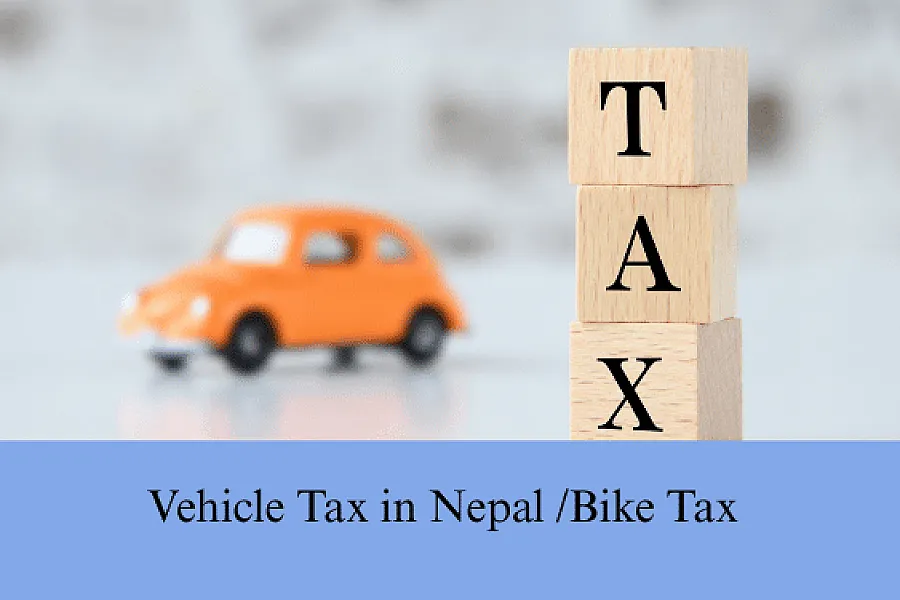
Vehicle tax in Nepal is a moving target on purpose — each of the seven provinces sets its own annual rates through its Finance Act, on top of the federal Motor Vehicles and Transport Management Act 2049. So "vehicle tax in Nepal" really means "vehicle tax in your province for this fiscal year". The Bagmati Province rate is not the Lumbini Province rate, and the rates can change each year with the provincial Economic Bill. Anyone quoting a single nationwide figure is wrong by design.
This is the 2026 (2082/83 BS) guide to vehicle tax in Nepal — the federal framework, why rates are provincial, the structure by engine cc and kW for electric vehicles, the end-of-Ashadh renewal deadline, the late fine, and how the tax differs from one-time registration charges. For related compliance, see our TDS in Nepal and Tax Clearance Certificate guides.
Quick answer — Vehicle tax in Nepal (2026):
Alpine Law Associates — trusted by 1,000+ clients across family, corporate, civil, and criminal cases in Nepal.
Speak with our lawyers today →
Our legal team is most often asked about vehicle tax in the context of a company fleet or a vehicle transfer — and the common mistake is using last year's rate or a different province's rate. Because the rate is provincial and annual, the only safe move is to check this year's figure with the provincial transport management office or the Bagmati / your province Economic Bill before paying. The federal Act sets the frame; the provincial bill sets the number.
The federal Motor Vehicles and Transport Management Act 2049 (1993) sets the framework — vehicle classification, registration, transfer, and the operation of transport management offices — while vehicle tax is a provincial subject under Nepal's federal structure since the 2015 Constitution. Each of the seven provinces sets and collects its own annual vehicle tax through its Economic Bill / Finance Act, and the rates are paid at the provincial transport management offices. So vehicle tax is federal-framework, provincial-rate.
The annual vehicle tax — sawari sadhan ko kar, also called road tax — is the yearly tax paid by every registered vehicle to its provincial transport management office, separate from the one-time taxes paid at registration. The amount varies by vehicle type (motorcycle, car, jeep, van, bus, truck), by engine displacement in cc for petrol or diesel vehicles, and by motor capacity in kW for electric vehicles, and the precise figure is set in the relevant province's Finance Act.
Because vehicle tax is a provincial subject under the federal Constitution and the Inter-Governmental Fiscal Arrangement Act, each province exercises its own taxing power and sets its own rate through its annual Economic Bill. So Bagmati Province may keep its rates unchanged in 2026 while another province may revise them; rates also vary between provinces for the same vehicle. For an accurate figure, the only reliable source is the province where the vehicle is registered for the current fiscal year.
As an indication, Bagmati Province's Economic Bill for the current fiscal year keeps the annual tax broadly at around NPR 3,000 for the smallest motorcycles (up to 125 cc), rising in steps to NPR 30,000–35,000 for the largest motorcycles; around NPR 22,000 for the smallest cars (up to 1,000 cc), rising to NPR 65,000–70,000 for the largest engines; and lower rates for electric vehicles by kW. Other provinces are commonly a little lower at the same engine band. Confirm the current rate with the provincial transport management office.
The annual vehicle tax is due by the end of Ashadh (around mid-July) each fiscal year, paid at the provincial transport management office, together with the small road-permit / blue-book renewal fee. Many provinces accept payment through online channels such as the Nagarik App, eSewa, Khalti and ConnectIPS. Paying late attracts an additional fine on a graduated schedule that increases the longer the delay runs, so paying within the deadline avoids unnecessary cost.
Electric vehicles attract materially lower annual vehicle-tax rates than equivalent petrol or diesel vehicles, as a policy push to encourage EV adoption in Nepal. EV rates are typically set by motor capacity in kW rather than engine cc, with a banded structure from small two-wheelers through to large four-wheelers. The exact bands and figures are set in each province's Finance Act, so the EV rate, like every other rate, has to be confirmed for the current fiscal year and the province where the vehicle is registered.
For most owners, vehicle tax is administrative and does not need a lawyer. A lawyer adds value for a fleet, a corporate vehicle transfer, an inherited vehicle, a vehicle moved between provinces, or a dispute with the transport office on the applicable band or penalty. For those situations, the federal and provincial rules can interact in non-obvious ways. To resolve a fleet or a transfer matter, speak with our lawyers today.
Last reviewed: May 2026
Each province sets its own annual vehicle-tax rates through its Finance Act, under the federal framework of the Motor Vehicles and Transport Management Act 2049.
By the end of Ashadh (around mid-July) each fiscal year, paid at the provincial transport management office. Late payment attracts a graduated fine.
Yes. EVs attract materially lower annual vehicle-tax rates than equivalent petrol or diesel vehicles, by motor capacity in kW rather than engine cc, as a policy push to encourage adoption.
The federal Motor Vehicles and Transport Management Act 2049 (1993) sets the framework — vehicle classification, registration, transfer, and the operation of transport management offices — while vehicle tax itself is a provincial subject under Nepal's federal structure since the 2015 Constitution. So each province sets and collects its own annual vehicle tax through its Economic Bill, alongside the federal Act that frames vehicle administration.
Because vehicle tax is a provincial subject under the federal Constitution, each of the seven provinces exercises its own taxing power and sets its rate through its annual Finance Act. So rates differ between provinces for the same vehicle, and can change each year as the provincial Economic Bill is passed. Any source quoting a single nationwide vehicle-tax figure is incorrect by design — the rate is always province-specific and fiscal-year-specific.
"Sawari sadhan ko kar" is the Nepali term for the annual vehicle tax — sometimes called road tax in English — paid each fiscal year by registered vehicles to the provincial transport management office. The amount depends on vehicle type and engine cc for petrol or diesel vehicles, and motor capacity in kW for electric vehicles, and is set by the relevant province's Finance Act. It is separate from the one-time taxes paid when the vehicle is first registered.
Beyond the annual road tax, the one-time charges at registration include customs duty (on imported vehicles), excise duty, VAT (on new vehicles), the registration fee and the number-plate fee. These are federal levies paid once when the vehicle is registered. Together they typically dwarf the annual tax for the first year, especially for imported four-wheelers, and they are administered by the Department of Customs and the federal transport authorities rather than the province.
The annual deadline is the end of the Nepali month of Ashadh — around mid-July — corresponding with the fiscal-year close. Many vehicle owners pay close to the deadline, which sometimes leads to long queues at the provincial transport management office. Paying within the deadline avoids the late-fine schedule that begins to apply afterwards. The exact deadline date can shift slightly between provinces, but end-of-Ashadh is the consistent reference point.
Paying after the end-of-Ashadh deadline attracts a graduated late fine that increases the longer the delay, with bands typically rising from a small percentage close to the deadline up to a higher percentage if payment is months overdue. The exact schedule is set provincially and is administered through the transport management offices. Because the fine compounds with months, paying within the deadline — or as close to it as possible — is the practical rule.
Vehicle tax is paid at the provincial transport management office that holds the vehicle's blue book, where the road-permit / blue-book renewal happens at the same time. Many provinces now also accept payment through online channels such as the Nagarik App, eSewa, Khalti and ConnectIPS, with the receipt entered into the system. Confirm with your transport office which channels are accepted in your province for this fiscal year.
Yes. For petrol and diesel vehicles, the annual tax bands are typically set by engine displacement in cc — smaller engines in the lowest bands, large engines in the highest. For electric vehicles, the bands are set by motor capacity in kW. Heavy commercial vehicles such as buses and trucks have their own bands. The specific cc/kW thresholds and the corresponding amounts are set in the provincial Finance Act for the fiscal year, so the structure exists but the numbers move.
Registration taxes — customs, excise, VAT (for new vehicles), and registration and number-plate fees — are federal one-time charges paid when the vehicle is first put on the road. The annual vehicle tax, by contrast, is a provincial recurring tax paid every fiscal year to the provincial transport management office. They sit under different laws and different authorities, and they cover different fiscal events, so a vehicle pays both in its first year and the annual one thereafter.
Yes, in many provinces — Bagmati Province in particular accepts online payment through the Nagarik App and partner platforms such as eSewa, Khalti and ConnectIPS, alongside in-person payment at the transport management office. The exact set of accepted online channels varies by province and over time, so confirm with your provincial transport management office or check the current channels listed on the provincial portal before paying online.
Electric vehicles are taxed by motor capacity in kilowatts (kW) rather than engine cc, with bands rising from small two-wheelers through to large four-wheelers, and rates set materially lower than equivalent petrol or diesel vehicles as a policy push for EV adoption. The exact bands and figures are set in each province's Finance Act, so the EV rate has to be checked annually and by province like any other vehicle rate, but the structural relief for EVs is the consistent feature.
Yes. Commercial vehicles — buses, trucks, taxis, tippers — pay their own annual vehicle tax under the same provincial framework, typically at different rates and bands from private vehicles. Public-service vehicles often face additional permit, route and inspection requirements alongside the tax, administered by the transport management offices. For a fleet operator, the annual road-tax run is part of the routine compliance calendar alongside vehicle inspections and driver-licence renewals.
Non-payment of vehicle tax means the blue-book renewal does not happen, so the vehicle is technically not road-legal for the new fiscal year, with the late-fine clock running. In practice this surfaces at any checkpoint or transfer, and accumulates each year. Resolving a multi-year arrears situation requires paying the back taxes, the accumulated late fines, and any administrative charges before the blue book can be renewed and the vehicle put back on the road formally.
Vehicle tax is paid in the province where the vehicle is registered — i.e. where its blue book sits with the provincial transport management office — which is usually where the owner lives or where the vehicle was first registered. If the vehicle is moved permanently to a different province, a transfer process applies, after which the tax follows the new province. This is why moving a vehicle between provinces is more than just a change of address.
Transferring a registered vehicle between provinces involves a process at the transport management offices in both provinces — clearing dues in the originating province, obtaining the transfer documents, and re-registering in the new province where the future annual tax will be paid. Because the process is administrative and involves dues, taxes and possibly a fresh number plate, a fleet owner or someone moving permanently should plan it in good time, ideally outside the busy end-of-Ashadh rush.
Owning a personal vehicle does not by itself affect personal income tax — the annual vehicle tax is a separate, indirect-style provincial levy. However, for a business-owned vehicle, depreciation and running costs interact with the business's income-tax filings, and a vehicle used in hire or transport business has additional tax considerations. So for individuals it is simple; for businesses, the vehicle is part of the broader income-tax computation.
For most owners, vehicle tax is administrative and does not need a lawyer. A lawyer adds value for a corporate fleet, a vehicle transfer, an inherited vehicle, a vehicle moved between provinces, multi-year arrears, or a dispute with the transport office on the applicable band or penalty. For those situations, the federal Act and provincial rules can interact in non-obvious ways, and getting the position right at the outset prevents an escalating dispute or a backlogged blue book.
Disclaimer:
This article is intended solely for informational purposes and should not be interpreted as legal advice, advertisement, solicitation, or personal communication from the firm or its members. Neither the firm nor its members assume any responsibility for actions taken based on the information contained herein.