-thumb.webp)
Company Registration in Nepal (2026): CAMIS Process, Fees & Capital
A 2026 practitioner's guide to company registration in Nepal — Companies Act 2063, OCR's CAMIS digital portal,...
Read more →
Alpine Law Associates is the leading full-service law firm encompassing a wide range of legal practices located in Kathmandu, Nepal. It consists of a team of the country's best lawyers, each with expertise in their respective fields, tailored to meet clients' specific needs.
Anamnagar-29, Kathmandu


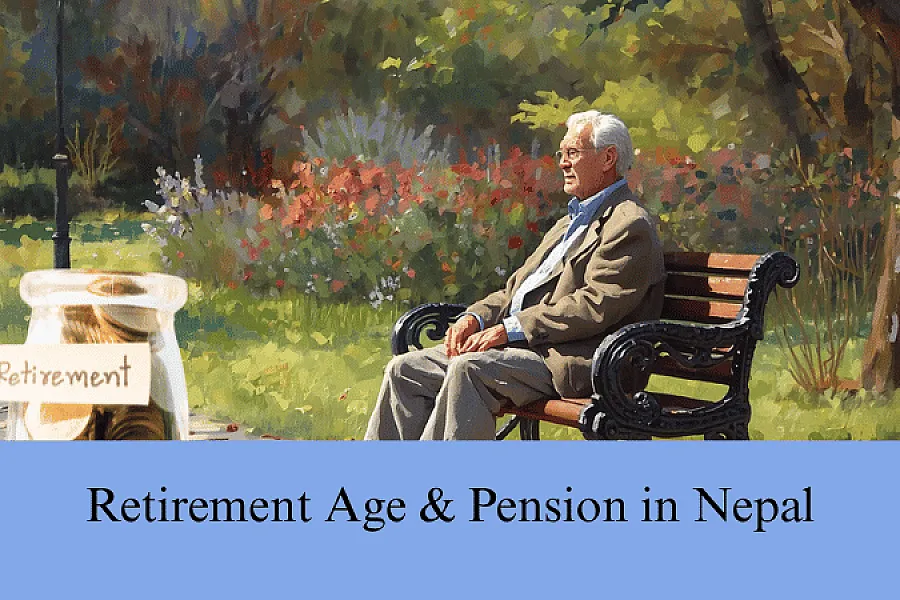
Retirement age in Nepal depends on the legal scheme. Civil servants generally retire at 58 under the Civil Service Act 2049; SSF old-age pension is linked to age 60 and 180 contribution months; private-sector retirement depends on the contract or policy; and the senior-citizen allowance has separate age rules.
Nepal has no single retirement rule for every worker. The Civil Service Act 2049, Labour Act 2074, Contribution-Based Social Security Act 2074 and Senior Citizens Act 2063 create separate routes. Your employment status, contribution history, age and applicable category determine which pension or allowance question you should ask.
Nepal applies different retirement ages to different groups. Civil servants generally retire at 58 under the Civil Service Act 2049. Supreme Court judges have a separate constitutional retirement age of 65. Private employees do not share one statutory age under the Labour Act 2074, while SSF old-age pension uses age 60 as a benefit condition.
The phrase “retirement age in Nepal” therefore needs a subject. A government officer, a factory employee enrolled in the Social Security Fund, a person working under an individual contract and an elderly person seeking a social allowance may face different rules.
The Public Service Commission is a relevant public entity for the civil-service framework. The Nepal Law Commission is also an appropriate place to check the governing legislation. You can review the Public Service Commission and the Nepal Law Commission, then verify the position with the relevant office before acting.
Civil-service retirement generally occurs at 58 under the Civil Service Act 2049. A civil servant with at least 20 years of pensionable service is described as eligible for a pension on retirement. The traditional calculation is broadly last drawn salary multiplied by years of service, divided by 50, subject to the applicable legal floor, ceiling and service conditions.
This formula is often explained as about two percent of the relevant last salary for each year of service. That shorthand is not a substitute for checking the service file. The salary base, recognised service period and any statutory condition can affect the result.
The current framework is also commonly discussed alongside a proposed contributory pension arrangement for new recruits. The status and application of that proposal should be verified before a new or serving employee relies on it. Do not assume that a proposed scheme automatically changes an existing pension entitlement.
The current article’s stated description includes a commonly cited floor and ceiling of 50% to 100% of basic salary. Because the exact application depends on the governing rules and the person’s record, treat that range as a point for verification, not as a guaranteed payment.
The private sector has no single universal retirement age under the Labour Act 2074, according to the supplied framework. Retirement may instead depend on the employment contract, employer policy or a collective bargaining agreement. A public body or statutory organisation may follow its own enabling law, so its rule requires separate checking.
This distinction matters for both employers and employees. An employer should not copy the civil-service age of 58 into every private contract without examining the governing arrangement. An employee should not assume that reaching age 60 automatically ends employment merely because age 60 is relevant to SSF old-age pension.
Some employers may align their internal retirement policy with the SSF pension trigger. That is a policy choice or contractual arrangement, not a universal rule created by the Labour Act. The contract should be read with the employer’s policy and any applicable collective agreement.
For workplace drafting or a dispute about retirement, our team can help you review the relevant employment terms through labour law advisory in Nepal. The receiving authority, employer and applicable statute determine the position in a particular matter.
The SSF old-age protection route provides a monthly retirement pension at age 60 where the member has at least 180 months of contributions. The Social Security Fund administers this contribution-based framework. A member reaching age 60 with fewer than 180 contribution months receives a lump sum under the stated rule.
SSF means the Social Security Fund. It is different from the traditional civil-service pension. The SSF benefit is connected to the member’s accumulated contributions and returns over the contribution period, while the civil-service route is described through pensionable service and the traditional salary-based formula.
The 180-month threshold equals 15 years. That conversion helps you check the record, but it does not answer every entitlement question. Contribution gaps, the member’s account history and the applicable SSF rules should be verified with the Fund.
The official Social Security Fund is the relevant government body for checking the contribution-based scheme. Its records should be compared with the employee’s own contribution evidence before a pension or lump-sum decision is made.
For employers enrolled in the SSF framework, the supplied material describes a 31% contribution on basic salary, divided into 11% from the employee and 20% from the employer. It also describes this arrangement as replacing older statutory provident-fund and gratuity arrangements that applied under the Labour Act.
The earlier figures stated for the older provident-fund arrangement were 10% from the employee and 10% from the employer. Those figures should not be confused with the SSF contribution structure. They belong to different arrangements and should be checked against the employee’s coverage and enrolment position.
The framework does not mean every retirement account in Nepal becomes identical. The current material states that the Employees Provident Fund and Citizens Investment Trust continue to operate for civil servants in pensionable service, voluntary contributors and employers that have not migrated to SSF.
Before deciding whether an older benefit has been replaced, identify the employer’s SSF status, the worker’s contribution history and the scheme that covered the relevant period. A worker’s payroll label alone may not answer that question.
| Employment-linked pensionDepends on civil-service status or SSF contribution history.faster route | Age-based allowanceDepends on age category and the senior-citizen framework. | |
|---|---|---|
| Main legal connection | Employment, service or contributions | Age and eligible category |
| Civil-service route | Retirement generally at 58 | Not a civil-service pension |
| SSF route | Age 60 with 180 contribution months | Not based on SSF contributions |
| General age stated | Civil service 58; SSF pension 60 | Senior-citizen allowance generally 68 |
| If conditions are not met | SSF member may receive a lump sum below 180 months | Verify category and current eligibility with the local authority |
Employment-linked pensions and the senior-citizen allowance are separate benefit routes in Nepal.
The senior-citizen allowance is separate from a civil-service pension and SSF retirement pension. The supplied framework states a general eligibility age of 68 under the Senior Citizens Act 2063. It also states a lower age of 60 for Dalit elderly people, Karnali residents and single women, subject to the applicable category and current verification.
The stated monthly allowance is 4,000 under the Senior Citizens Act 2063 framework, but rates may be revised through the annual budget. This is a statutory social benefit, not a professional fee or government service price. Verify the current amount and eligibility before relying on it for household planning.
The allowance is described as being paid by local government. Registration is described as occurring through the Department of National ID and Civil Registration. The exact local process, record check and current administrative requirements should be confirmed with the relevant local authority.
Do not combine the allowance with a pension calculation. A person may need to consider the legal basis, age category and payment route separately. Receiving or claiming one benefit does not, from the supplied material alone, establish entitlement to every other benefit.
Nepal does not have one document list for every retirement route in the supplied material. Civil-service, SSF and senior-citizen allowance questions involve different records and offices. Prepare an illustrative record set for review, but verify the actual documents required with the pension authority, Social Security Fund or local government.
For a civil-service review, the relevant information may include the person’s service history, retirement status and salary record. These are not stated here as a universal filing checklist. They are practical records to discuss when checking pensionable service and the salary-based calculation.
For an SSF review, the contribution account and contribution months are central to the stated age-60 and 180-month test. For an allowance review, age and the claimed category are central to the stated age rules. The office may require other records, and this article does not add an unsupported list.
These are illustrative records for a retirement-benefit discussion, not a universal statutory document checklist.
Start by identifying the person’s legal status, then match the status to the governing scheme. A civil servant, private employee, SSF member and senior citizen may need different offices and records. The decisive condition is whether the person satisfies the age, service, contribution or category rule for that route.
The supplied material does not establish one processing timeline for civil-service pension, SSF pension, SSF lump-sum payment or senior-citizen allowance registration. The time can depend on the responsible office, record verification and the benefit route. You should therefore verify the current timeline directly instead of relying on a fixed promise.
Retirement age and payment-processing time are separate questions. Reaching age 58 may identify a civil-service retirement point, but it does not by itself state how quickly a pension file will be checked or paid. Similarly, reaching age 60 may satisfy one SSF condition without resolving the contribution record.
If an office asks for clarification, the issue may concern service history, contribution months, category eligibility or the governing employment terms. Keep written records of the question and response. Where the office has discretion or requires verification, an adviser cannot promise a result or processing date.
Alpine Law Associates can help you assess the legal route and communicate about a disputed retirement or benefit issue, but our team cannot promise registration, approval or a government processing time.
The most serious mistakes come from treating separate schemes as one system. Civil-service retirement at 58, SSF pension at 60 and the senior-citizen allowance age rules answer different questions. A correct review must preserve the scheme’s conditions instead of applying one age or formula across Nepal.
Consider this illustrative scenario: a private-sector employee reaches age 60 and has an SSF account, but the contribution record has fewer than 180 months. The employee should not assume a monthly SSF pension. The stated framework points instead to a lump sum, subject to verification of the account and applicable rules.
Now change the facts. A civil servant reaches 58 with more than 20 years of pensionable service. That person is examining a different route under the Civil Service Act 2049. The civil-service formula and service record matter; the SSF age-60 test does not replace that analysis.
A third person may be 68 and seeking the senior-citizen allowance. That person’s question concerns the Senior Citizens Act 2063 framework, local-government administration and current category requirements. It is not answered by asking whether the person has 180 SSF contribution months.
These examples are illustrative only. They do not guarantee eligibility, payment, processing time or a particular office decision. In a real matter, the documents and current records must be checked before advice is applied.
Legal help may be useful where retirement age is disputed, a private contract is unclear, civil-service service years are questioned, SSF contribution records do not match payroll, or a benefit is refused. The correct approach depends on the governing statute, employment terms, records and decision made by the responsible authority.
For private employers, advice may focus on drafting retirement clauses consistently with the employment arrangement. For employees, it may focus on interpreting the contract, policy or contribution record. For civil servants, the central questions may include retirement status, pensionable service and the traditional calculation.
For SSF members, the key issue may be whether the record satisfies the age and contribution conditions or instead falls within the lump-sum route. For senior citizens, the review may concern the age category, current allowance rate or local administrative response.
Our team can help you organise the legal issues, review available records and advise on a response. You can contact Alpine Law Associates through our contact page for a matter-specific assessment. This article is general information, not legal advice for your individual facts.
The main alternative to a monthly SSF pension is the stated lump-sum route where the member reaches age 60 with fewer than 180 contribution months. A private employee may also remain governed by a contract or policy rather than a fixed statutory age. Public and statutory bodies may follow separate enabling laws.
Other edge cases include a civil servant whose recognised service period is disputed, a worker whose employer’s SSF migration status is unclear, and a senior citizen who falls within a special age category. A proposed contributory pension arrangement for new recruits is another area where current status should be confirmed.
These cases show why “pension in Nepal” is not a single product. The legal source, payment body and eligibility test can change from one person to another. A lawyer can help distinguish a legal entitlement question from a record or administration question, but cannot replace the authority’s verification.
In 2026, use 2083 BS alongside the current year when checking Nepal-specific records, but do not assume that a new year changes every retirement rule. Start with the person’s scheme, check the governing Act and verify current rates, records and administrative requirements with the responsible authority.
For a civil servant, confirm retirement status and pensionable service. For a private employee, review the contract and policy. For an SSF member, check age and contribution months. For a senior citizen, verify age category, current allowance amount and local-government process.
| Route | Main age or condition stated | Benefit question | What to verify |
|---|---|---|---|
| Civil service | Retirement generally at 58 | Traditional pension after the stated service condition | Recognised pensionable service, salary record and current rules |
| Private employment | No universal age under the supplied Labour Act summary | Contract, policy or collective arrangement | Employment terms and any applicable enabling law |
| SSF old-age protection | Age 60 plus 180 contribution months | Monthly pension or, below the threshold, lump sum | SSF account, contribution months and current Fund position |
| Senior-citizen allowance | Generally 68; stated categories from 60 | Age-based social allowance | Current rate, category and local administrative requirements |
The table is a comparison aid, not a decision by the relevant authority. Pension rules and allowance rates can require current verification, especially where the annual budget or a person’s employment status affects the result.
Use the scheme that actually covers the person. Civil servants generally retire at 58; private-sector employees do not have one universal statutory retirement age in the supplied framework; SSF pension requires age 60 and 180 contribution months; and the senior-citizen allowance follows separate age and category rules.
If you need help reviewing a civil-service pension, SSF contribution issue, employment retirement clause or senior-citizen benefit question, contact Alpine Law Associates. Our team can advise on the relevant records and legal route, and our labour law advisory service can assist with employment-related retirement issues.
Disclaimer:
This article is intended solely for informational purposes and should not be interpreted as legal advice, advertisement, solicitation, or personal communication from the firm or its members. Neither the firm nor its members assume any responsibility for actions taken based on the information contained herein.
-thumb.webp)
-thumb.webp)
-thumb.webp)